Green up the city
The Royal Institute of British Architects
Type |
Skills Up Workshop for 16-18 year old students |
|---|---|
Client |
The Royal Institute of British Architects |
Theme |
Collaborative model-making and landscape design workshop, where students explored ideas for greening urban spaces through hands-on experimentation, spatial design and the creation of three-dimensional scale models. |
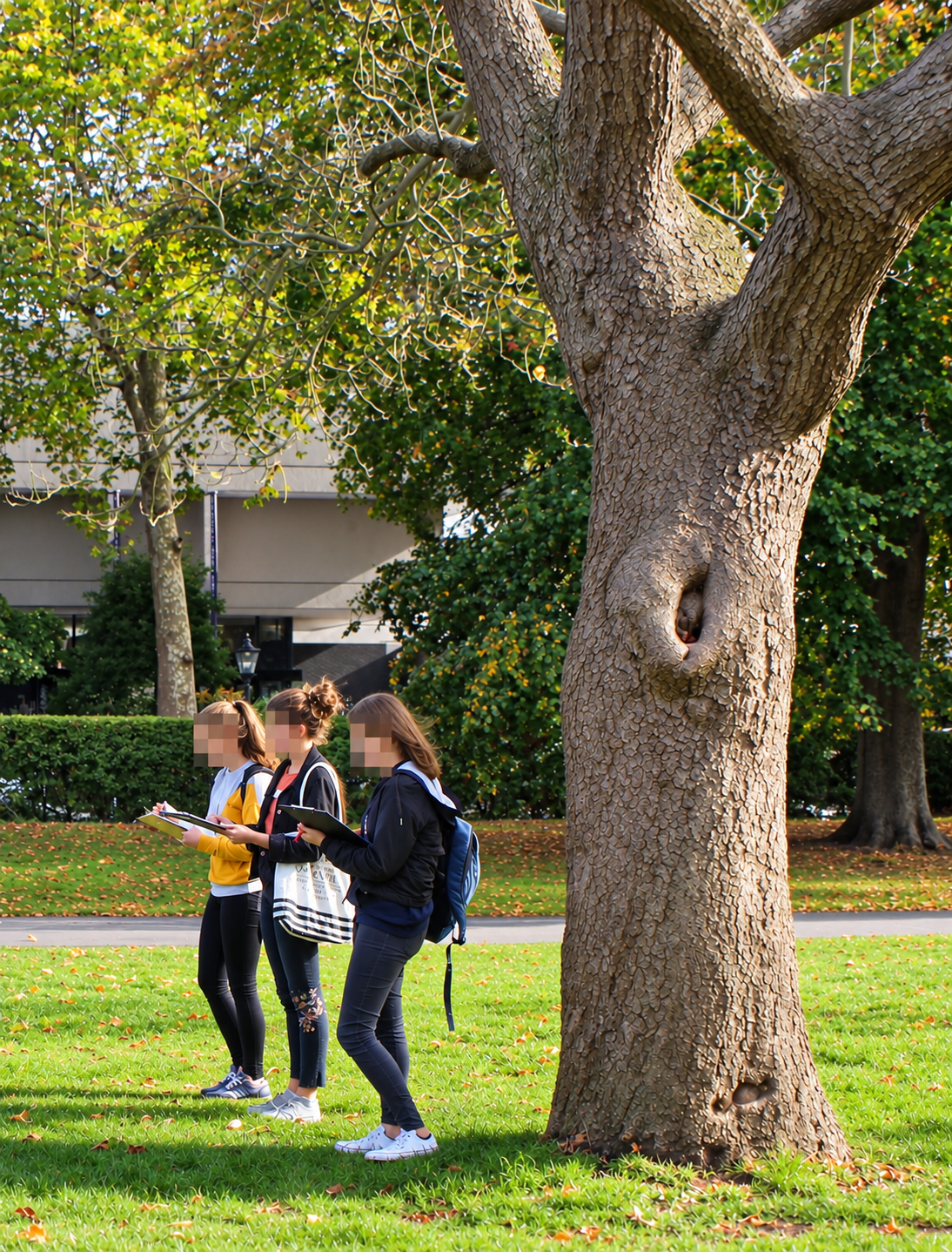
RIBA workshop © Lily Bakratsa
Overview
An introduction to landscape architecture
In this two-day class, I was asked to design and lead a workshop for young people with no previous experience of landscape architecture or design. The aim was to introduce participants to fundamental landscape architecture principles through creative, accessible and hands-on activities. Students explored how to observe and interpret spaces, identify design opportunities, work with shapes, materials, planting and spatial arrangements, and translate their ideas into design concepts. Through collaborative exercises, drawing, experimentation and three-dimensional model-making, they developed their own proposals while gaining an understanding of how landscape design can transform spaces and respond to people’s needs and the environment.
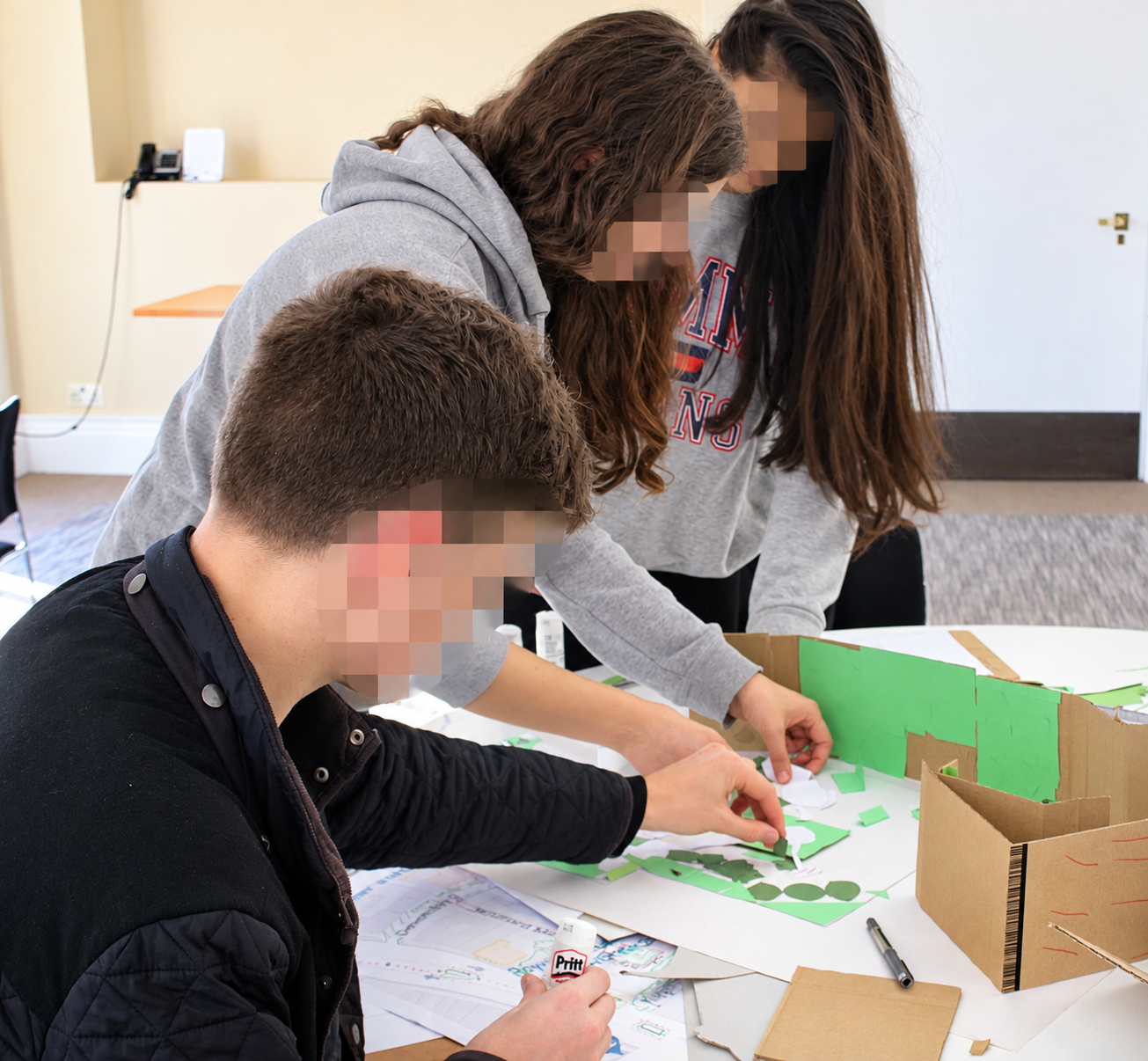
Brainstorming session © Lily Bakratsa
Process
From site exploration to collaborative design
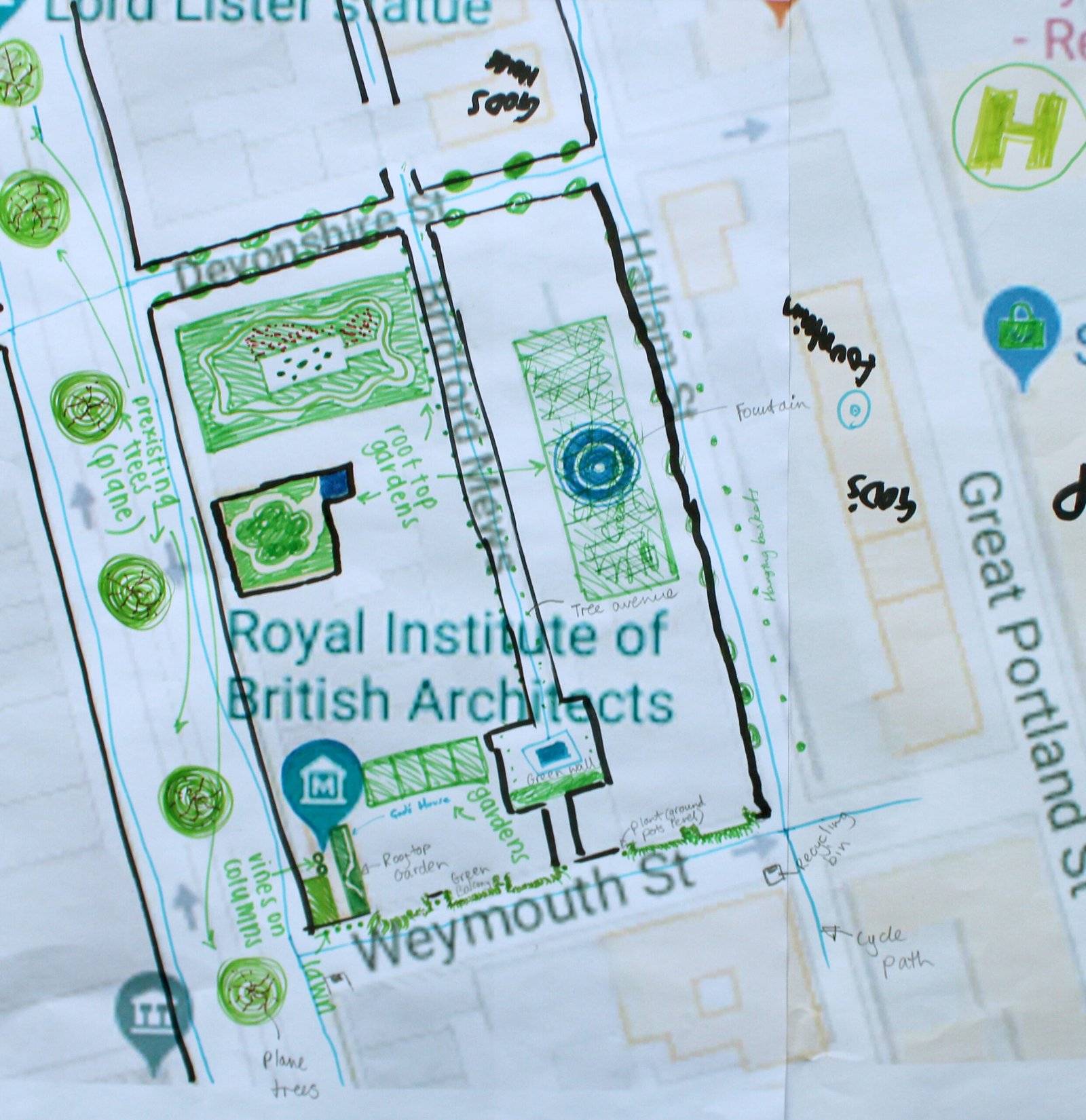
The workshop began with an outdoor exploration of the surrounding urban environment. Students were encouraged to observe the spaces around them, consider how people use them, and identify areas with potential for improvement and greening. Through guided site observation, they explored existing conditions, opportunities and constraints, and carried out a simple SWOT analysis (Strengths, Weaknesses, Opportunities and Threats) to develop a better understanding of the site. They then translated their observations into initial sketches, recording ideas and possible design interventions.
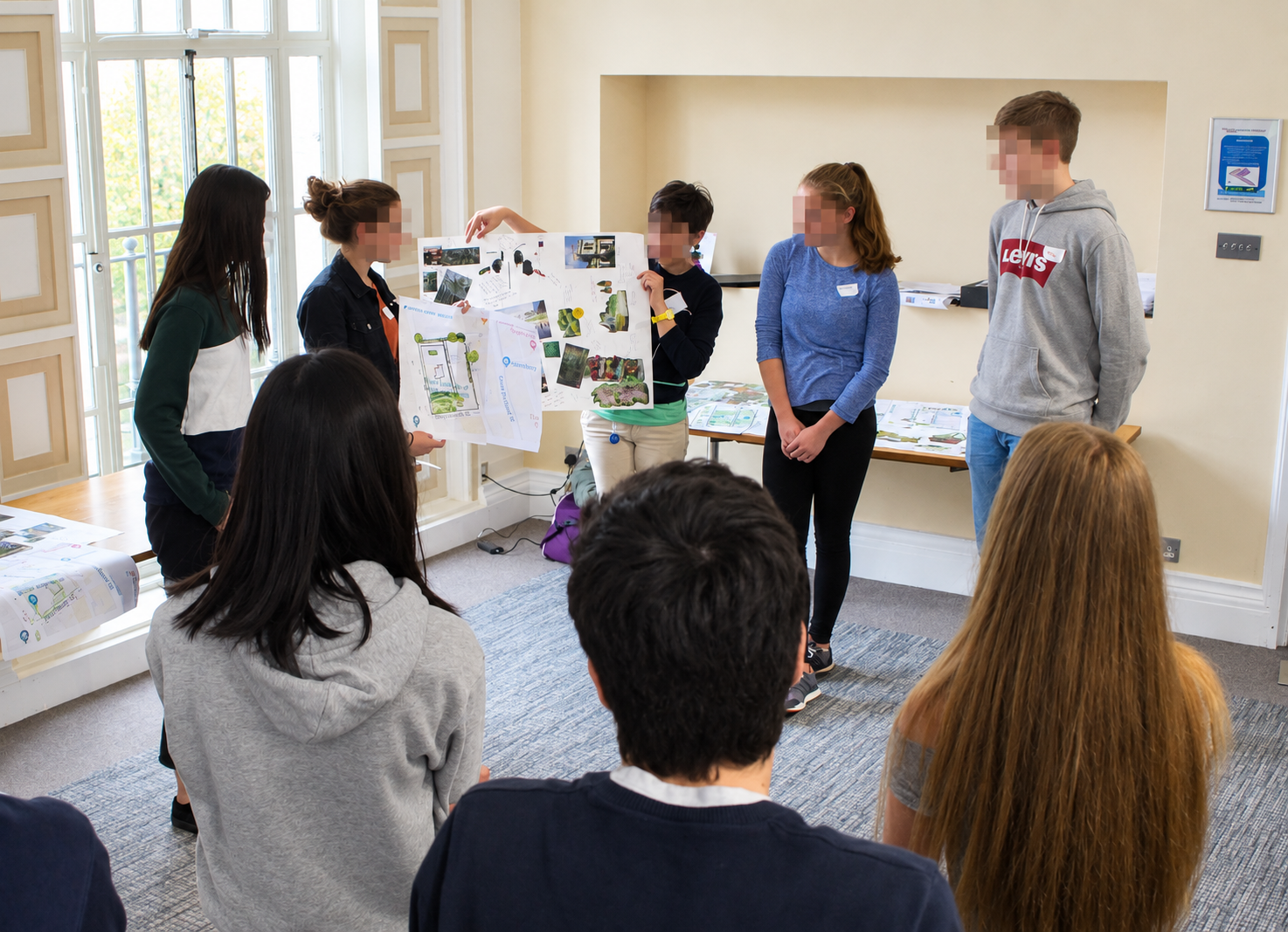
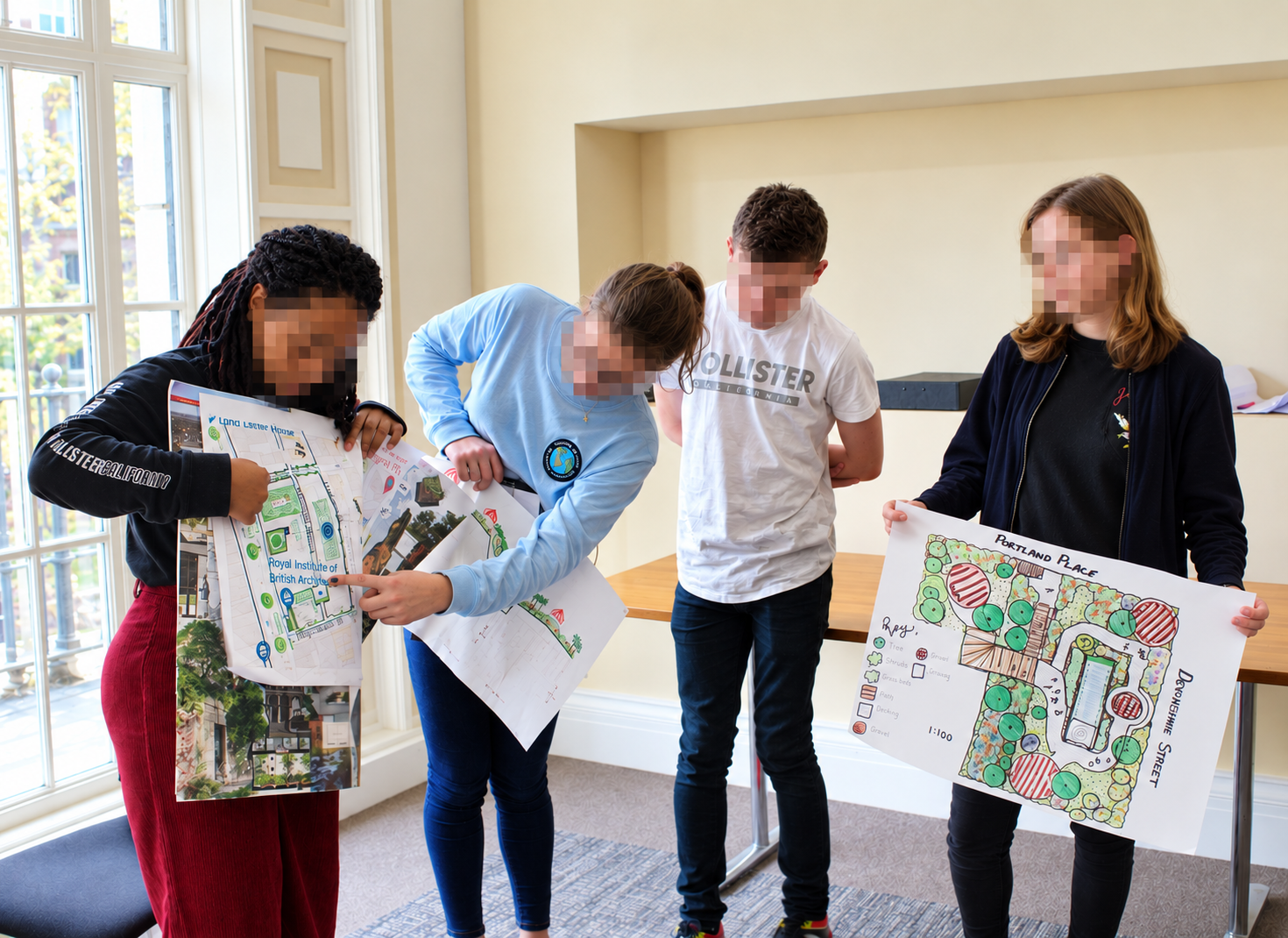
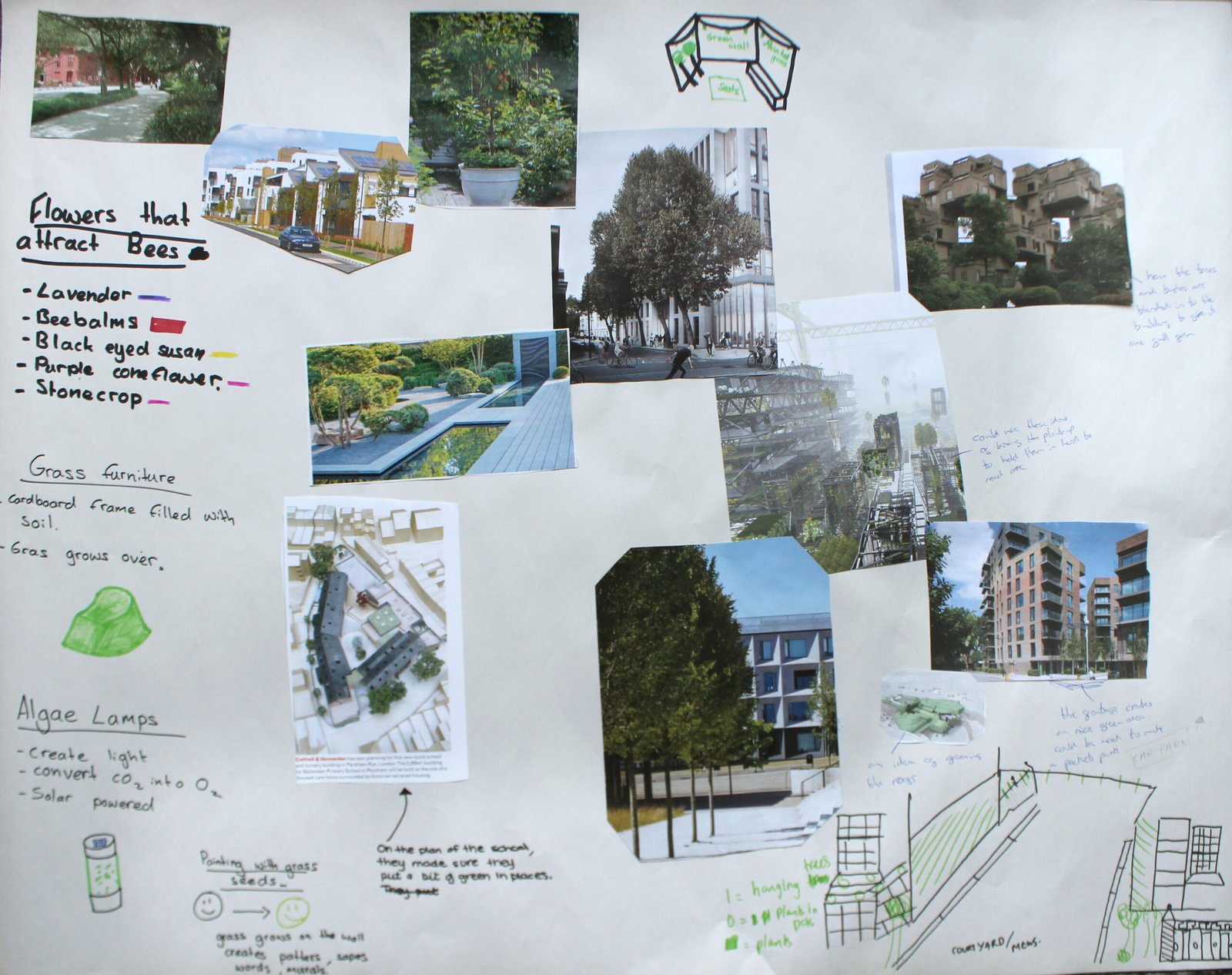
Back indoors, students shared and discussed their findings, exchanging ideas and identifying common themes. Working collaboratively in small groups, they developed design concepts through sketching, experimentation with shapes, materials and planting, and the creation of three-dimensional models. The process culminated in group presentations, where students explained their proposals and received feedback through a constructive peer-review and critical discussion session. This iterative process introduced them to key stages of landscape architecture practice, from site analysis and concept development to design communication and evaluation.
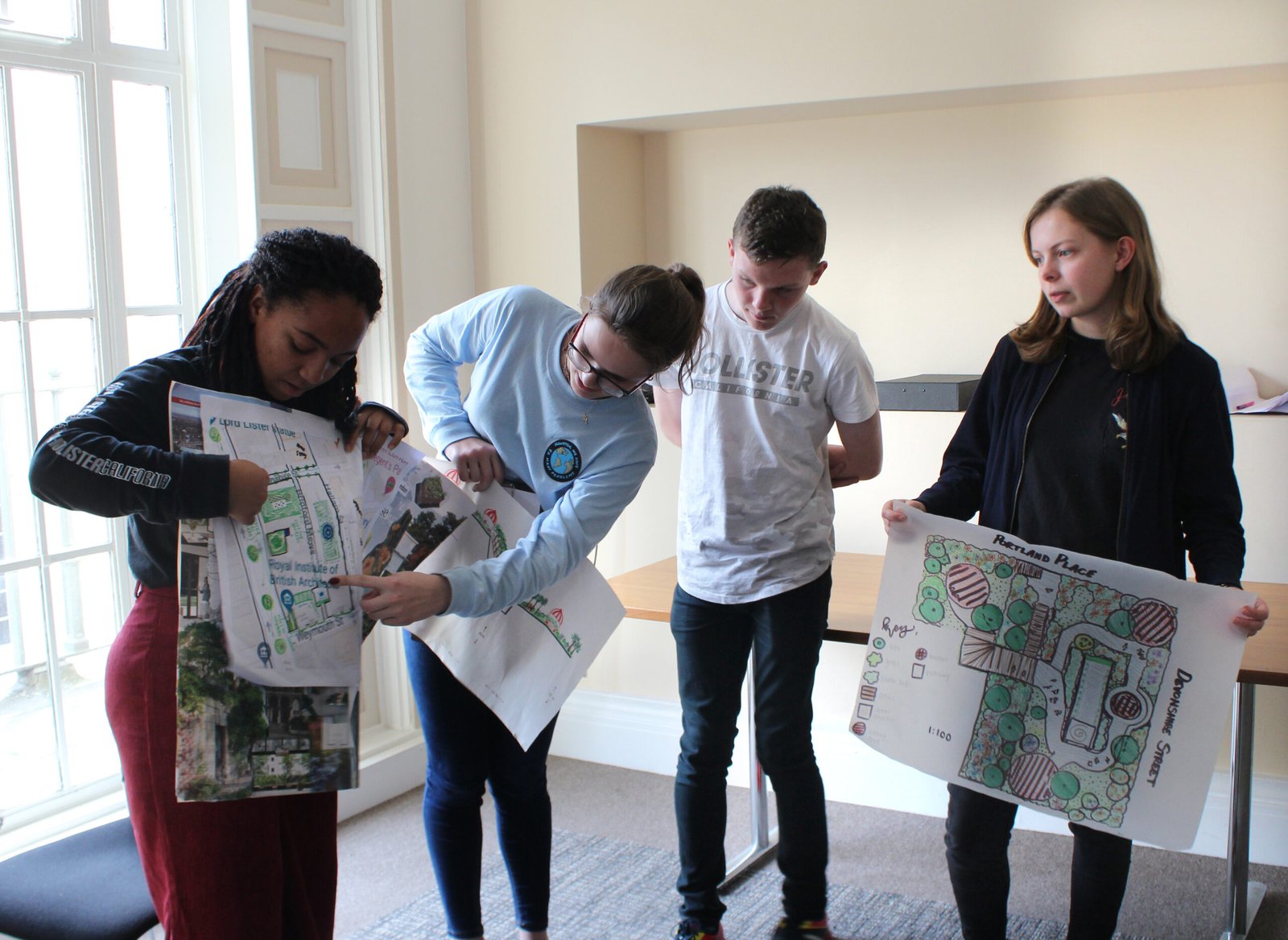
Presentation time © Lily Bakratsa
Results
From Ideas to Impact: Young designers reimagining their urban environment
The workshop resulted in a series of creative design proposals developed by the students, demonstrating their growing understanding of fundamental landscape architecture principles. Despite having no previous experience in the subject, participants were able to move from initial observations and site analysis to developing their own spatial concepts. Through sketches, collages and physical models, they explored ways to improve existing spaces, introduce greenery, incorporate planting and materials, and create more attractive and welcoming environments.
Beyond the design outcomes, the workshop encouraged collaboration, creative problem-solving and critical thinking. Students gained confidence in expressing and communicating their ideas, working as a team and responding constructively to feedback. The final presentations provided an opportunity to reflect on different approaches and understand how landscape architecture brings together environmental considerations, spatial organisation, aesthetics and people’s everyday experiences. Overall, the workshop offered participants an engaging first experience of landscape architecture as a creative and collaborative discipline.