

Lowfield primary school allotment
Sheffield

Type |
Participative design |
|---|---|
Location |
Sheffield |
Scale |
30 sq.m |
Client |
Groundwork Sheffield |
Status |
Completed |
|---|---|
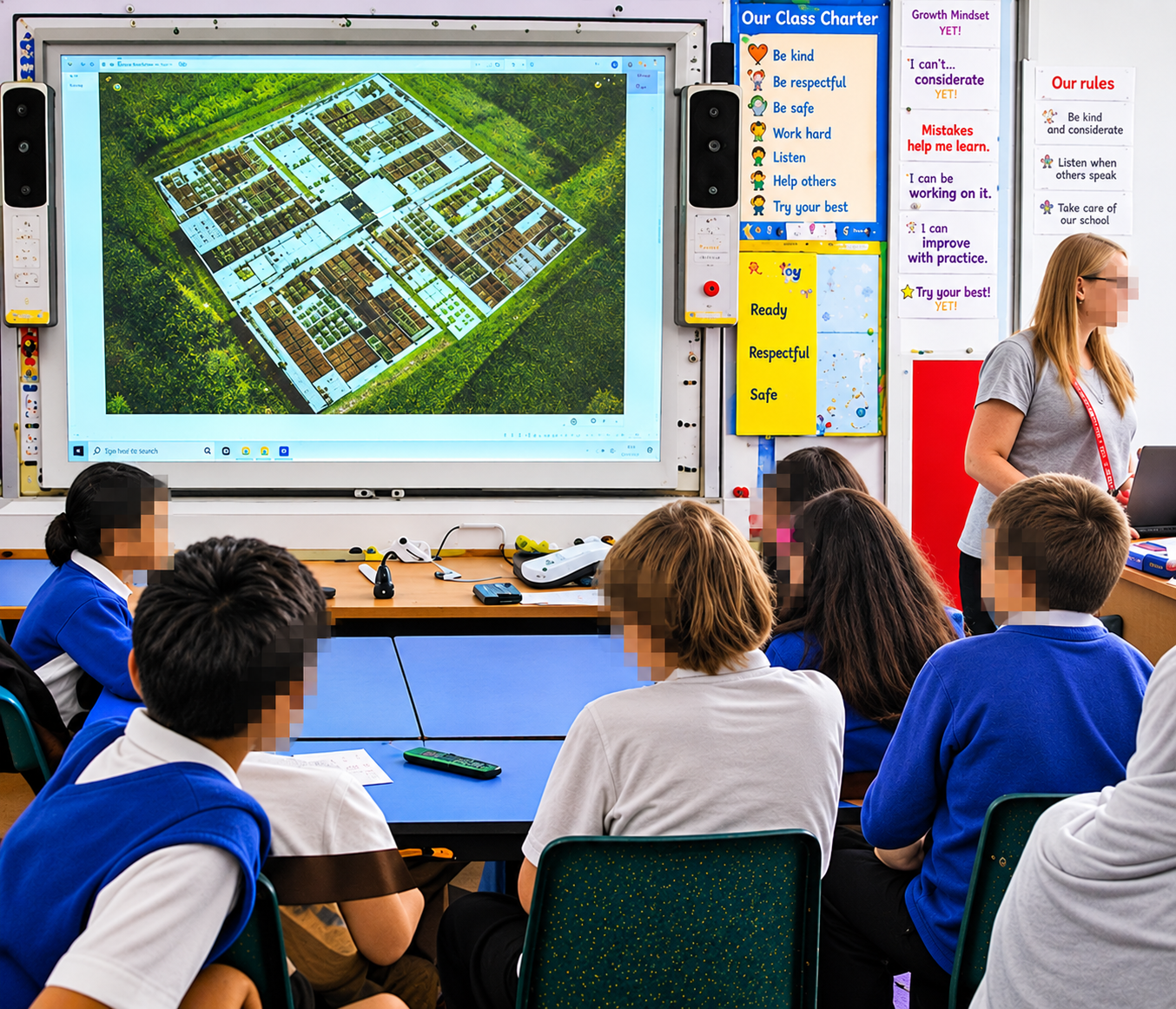
What is urban agriculture? © Lily Bakratsa
Ambition
Children at the heart of the design!
The ambition of the project was to transform the school grounds at Lowfield Primary School into a vibrant, productive and inclusive outdoor learning environment. Developed in collaboration with Groundwork Sheffield, the project aimed to introduce children to the principles of urban agriculture, environmental sustainability and the value of green spaces within an urban school setting. Beyond creating a school allotment, the ambition was to challenge conventional approaches to learning by taking education outdoors, encouraging children to engage directly with nature, understand where food comes from and develop a sense of environmental responsibility.
A central ambition was to place the children at the heart of the design process, giving them the opportunity to express their ideas, share their aspirations and actively contribute to shaping their own environment. Through participatory workshops, brainstorming activities and collaborative design sessions, pupils, teachers, volunteers and the wider community worked together to imagine a garden that reflected the school’s diverse cultural backgrounds and collective identity. The project sought not only to create a physical space for growing food and learning, but also to strengthen community relationships, encourage collaboration across generations and foster a lasting sense of ownership, pride and belonging.

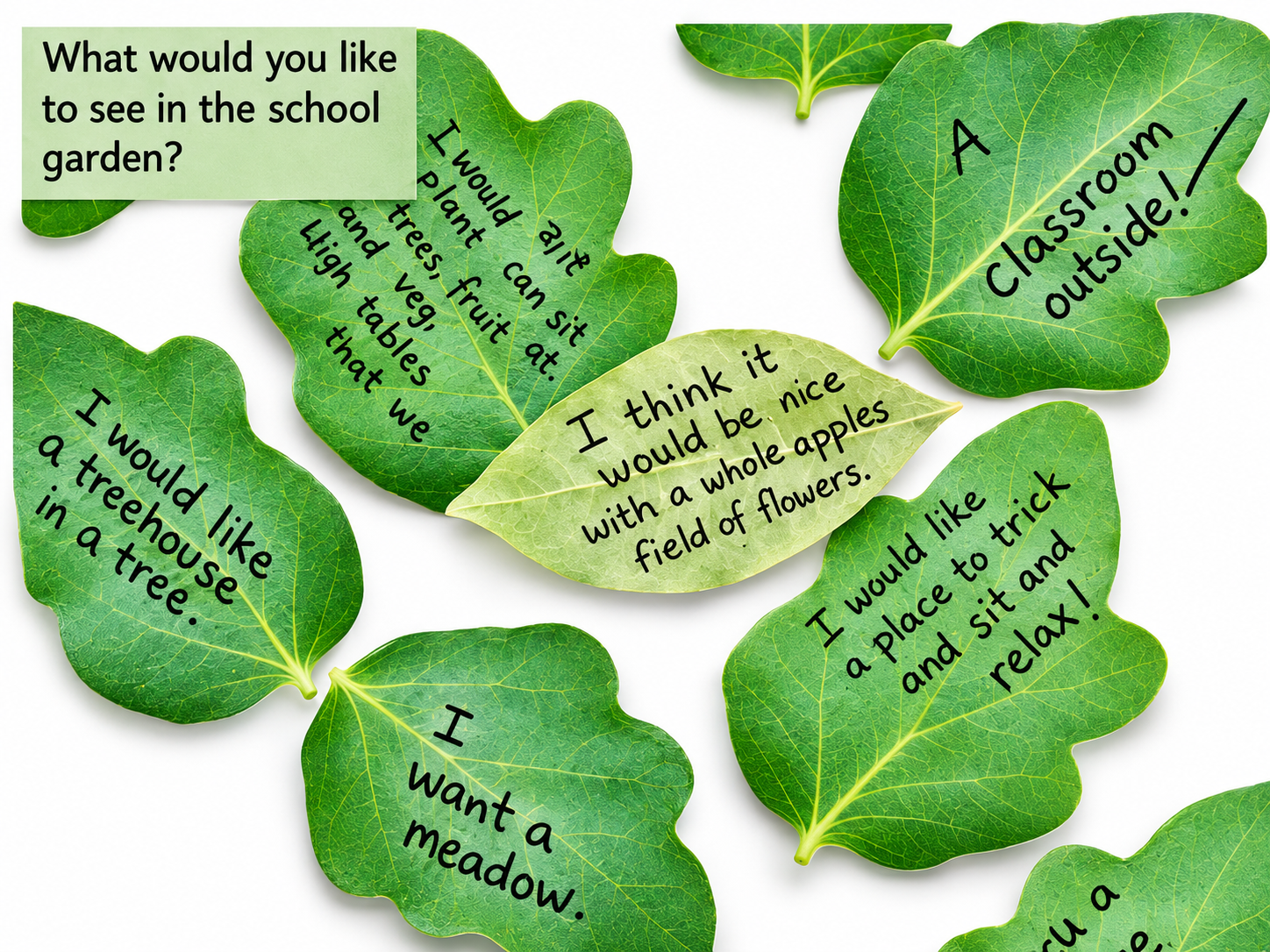
A wish list © Lily Bakratsa
Participative process
From vision to the site survey
The project began with an introductory presentation on urban agriculture, exploring what it is, how it can be integrated into urban environments and why it is important for communities, biodiversity and sustainable food production. Through visual examples and discussion, the children were introduced to different forms of urban growing, from school allotments and raised beds to community gardens. We then invited pupils to imagine what they would like to see in their own school garden. Through a collaborative activity, they created a *Wish Tree*, writing their ideas and aspirations on paper leaves. Their suggestions included planting fruit trees, creating a wildflower meadow, building a treehouse, having an outdoor classroom and developing spaces to sit, play and relax. This activity provided an opportunity for every child to contribute, ensuring that their voices and imagination informed the design process.
Following the initial workshops, we moved outdoors to investigate the school grounds and identify the opportunities and constraints of the site. Working alongside the pupils, we explored the available space, observed its existing conditions and used measuring wheels to establish its dimensions. This hands-on exercise introduced the children to basic site surveying and spatial analysis, allowing them to understand how a design proposal develops from an understanding of the physical environment. The process combined discussion, observation, measurement and creative thinking, gradually translating the children’s aspirations into a shared vision for the school allotment. Throughout, pupils, teachers, Groundwork volunteers and the wider community worked collaboratively, making the design process itself an important learning experience.
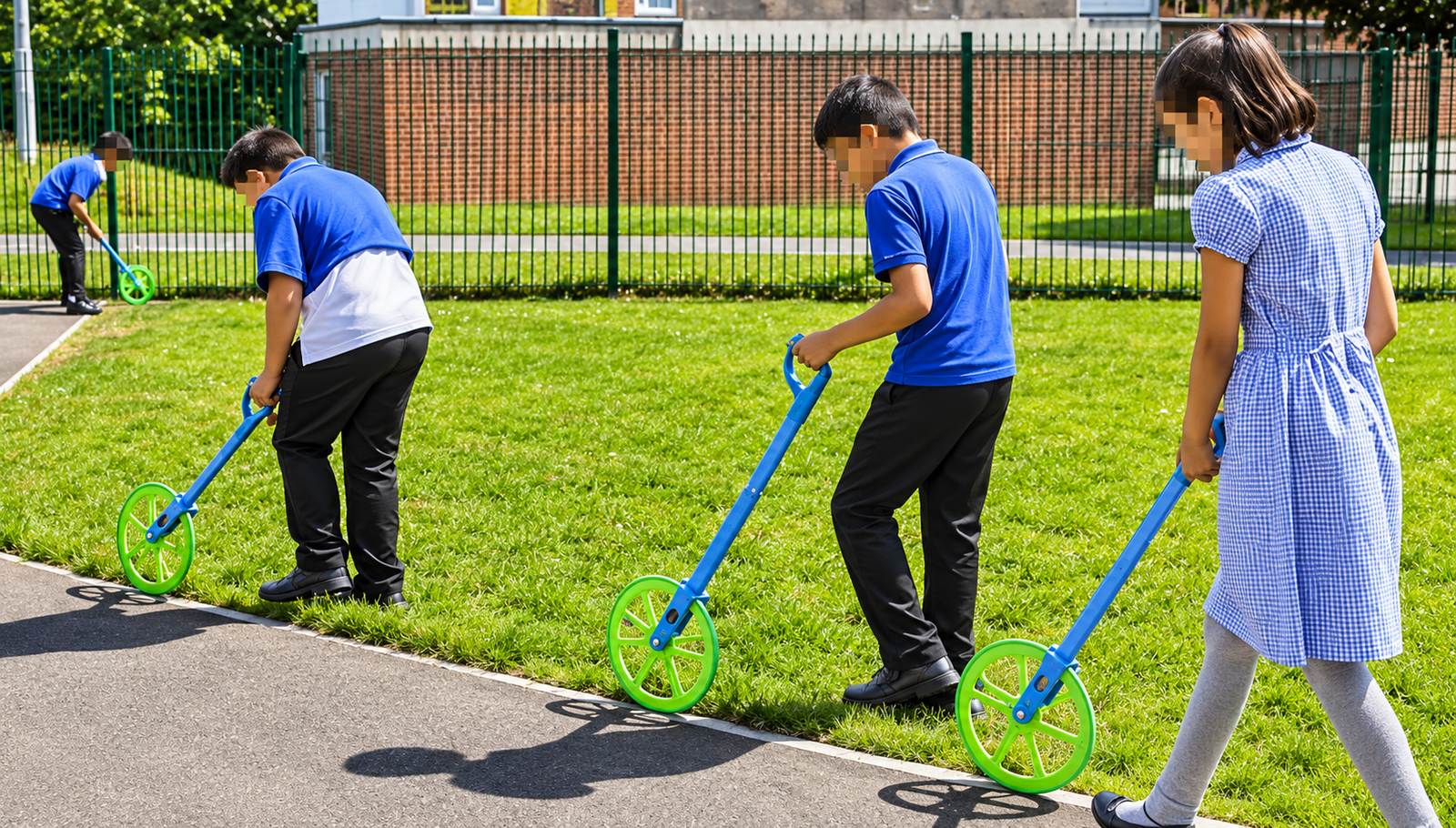
Site survey © Lily Bakratsa
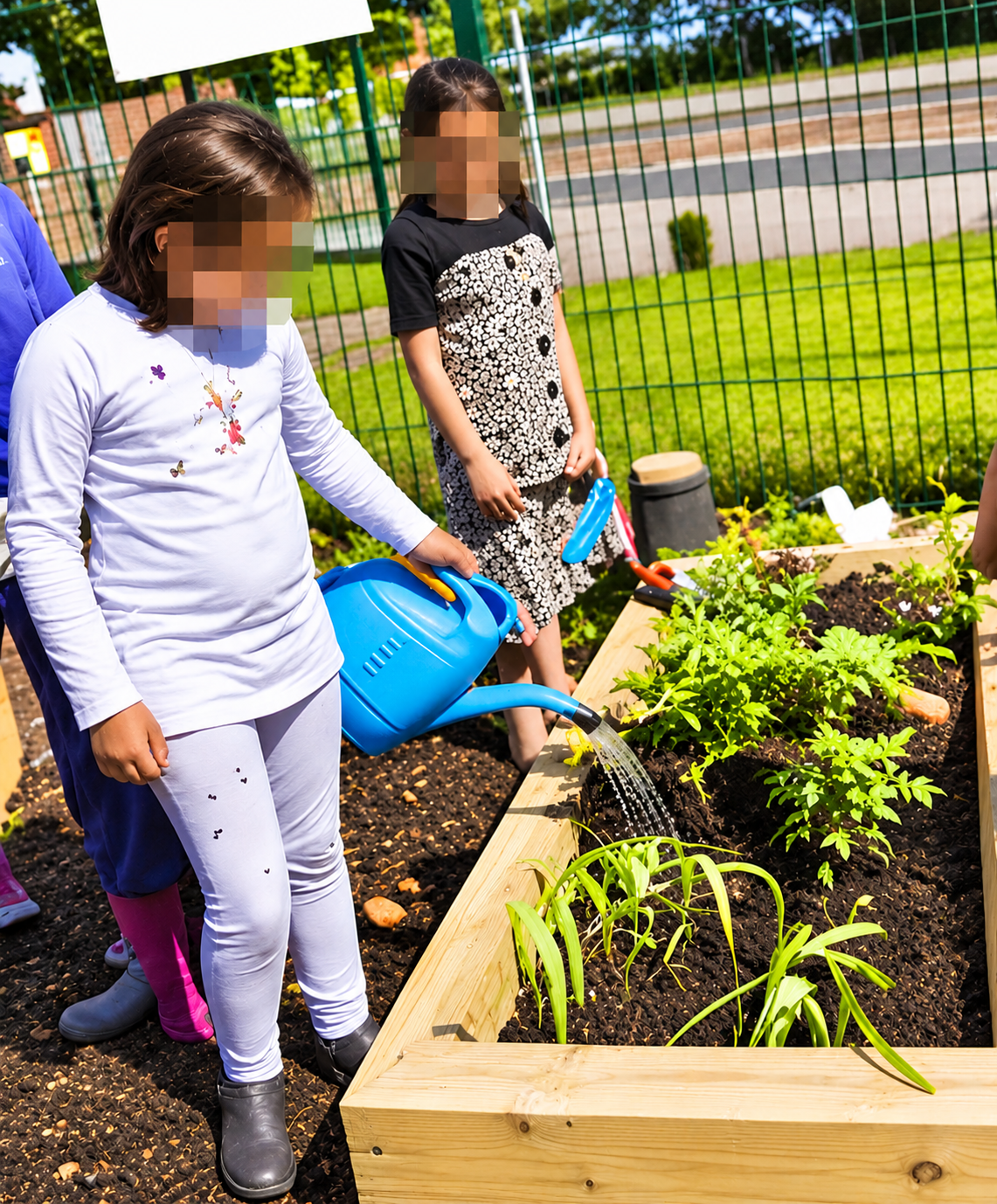
Establishment of the planting beds © Lily Bakratsa
Results
Learning, growing,designing together
By the end of the second day, the project had achieved a tangible transformation of the school grounds: an established school allotment, planted with vegetables and ready to become part of the school’s everyday life. What had started as an idea shaped by the children’s wishes had become a real, productive space that they could nurture and enjoy. Beyond the physical transformation, an important outcome was the creation of a dedicated gardening team, bringing together pupils and teachers to take responsibility for maintaining the allotment, caring for the plants and ensuring its continued development.
The project concluded with a celebration, bringing together the children, teachers, volunteers and wider community to recognise what they had achieved collectively. The celebration marked not simply the completion of a gardening project, but the beginning of a longer relationship between the school community and its outdoor environment. The allotment became a shared space for learning, growing and collaboration, demonstrating how a relatively small intervention, supported by participation and collective action, can create lasting educational, environmental and social value.