Building integrated agriculture
A qualitative comparative analysis of methods for commercial food production using buildings as an agricultural settlement.
Type |
Research proposal |
|---|---|
Department |
The University of Sheffield, Department of Landscape Architecture |
Supervisor |
Nigel Dunnett |
Year |
2011 |
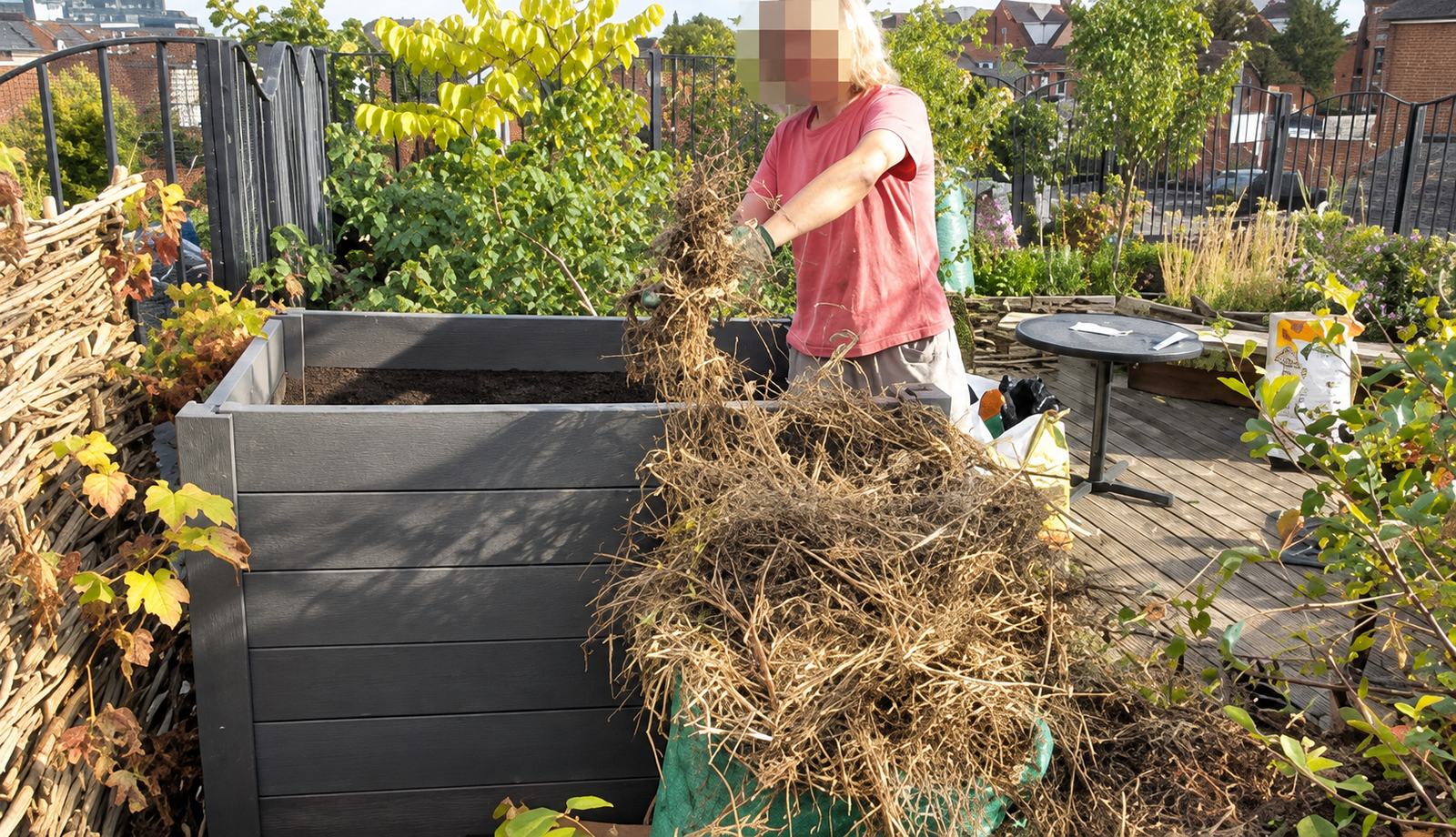
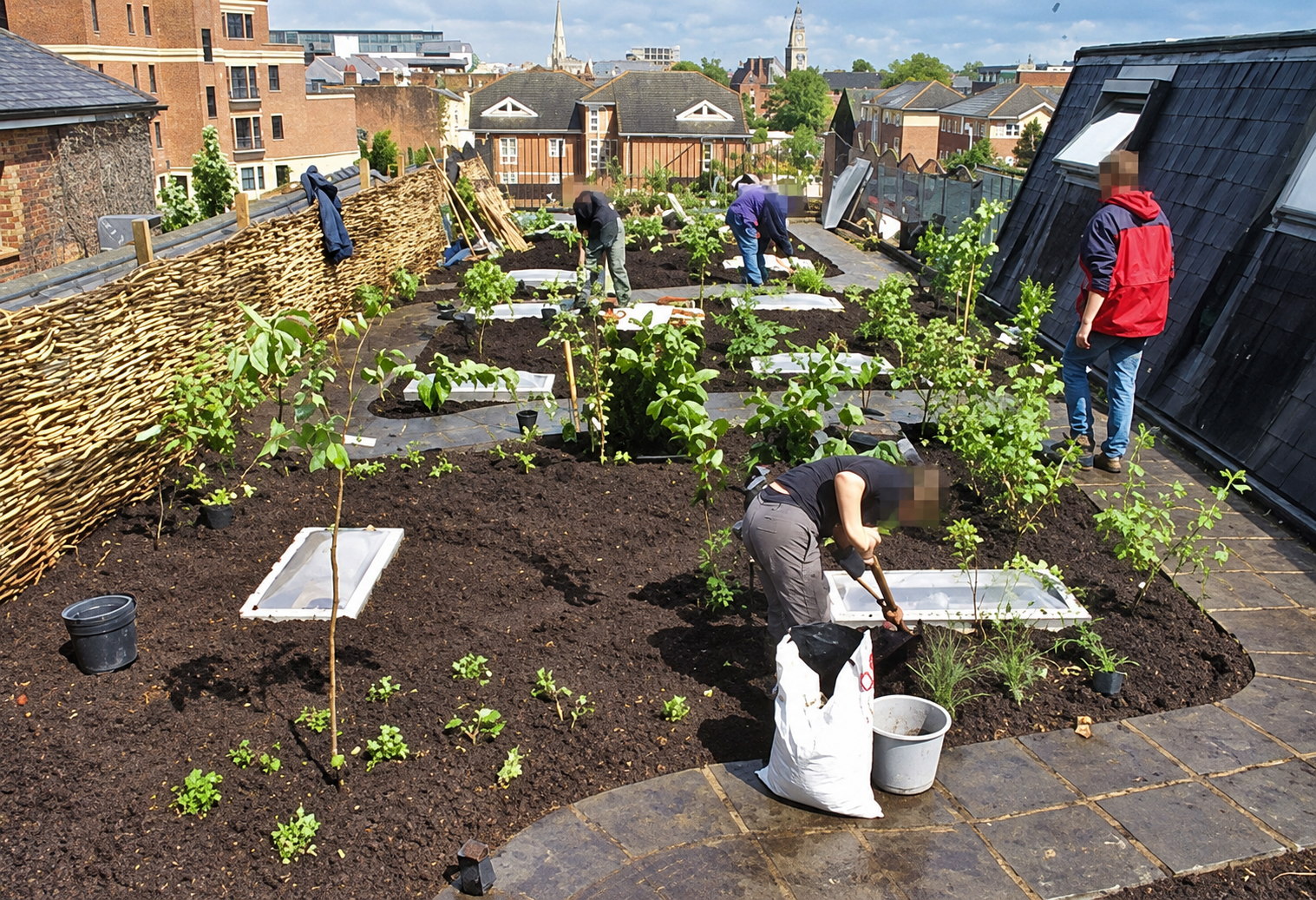
The making of the rooftop garden at RISC © Reading International Solidarity Centre
Research overview
What is the best method to grow food on buildings?
This research proposal, developed at the Department of Landscape Architecture at the University of Sheffield, investigated the potential for integrating commercial food production into buildings and the urban built environment. It explored how buildings could be used as productive agricultural spaces, extending beyond conventional rooftop cultivation to consider a range of innovative growing systems and their application in urban contexts.
The research examined different approaches to building-integrated agriculture, including rooftop food production, productive green roofs, container-based growing systems, vertical farming and hydroponic cultivation integrated into buildings. The central aim was to compare these methods in terms of their potential for commercial food production and to identify their respective advantages, limitations and suitability for different building types and urban conditions.
By bringing together approaches that are often considered separately, the research sought to establish a comparative understanding of how buildings could function as productive agricultural infrastructure. The ultimate objective was to identify the most appropriate approaches and the conditions under which different systems could contribute to urban food production, making more efficient use of built space while exploring opportunities to integrate agriculture into the urban environment.
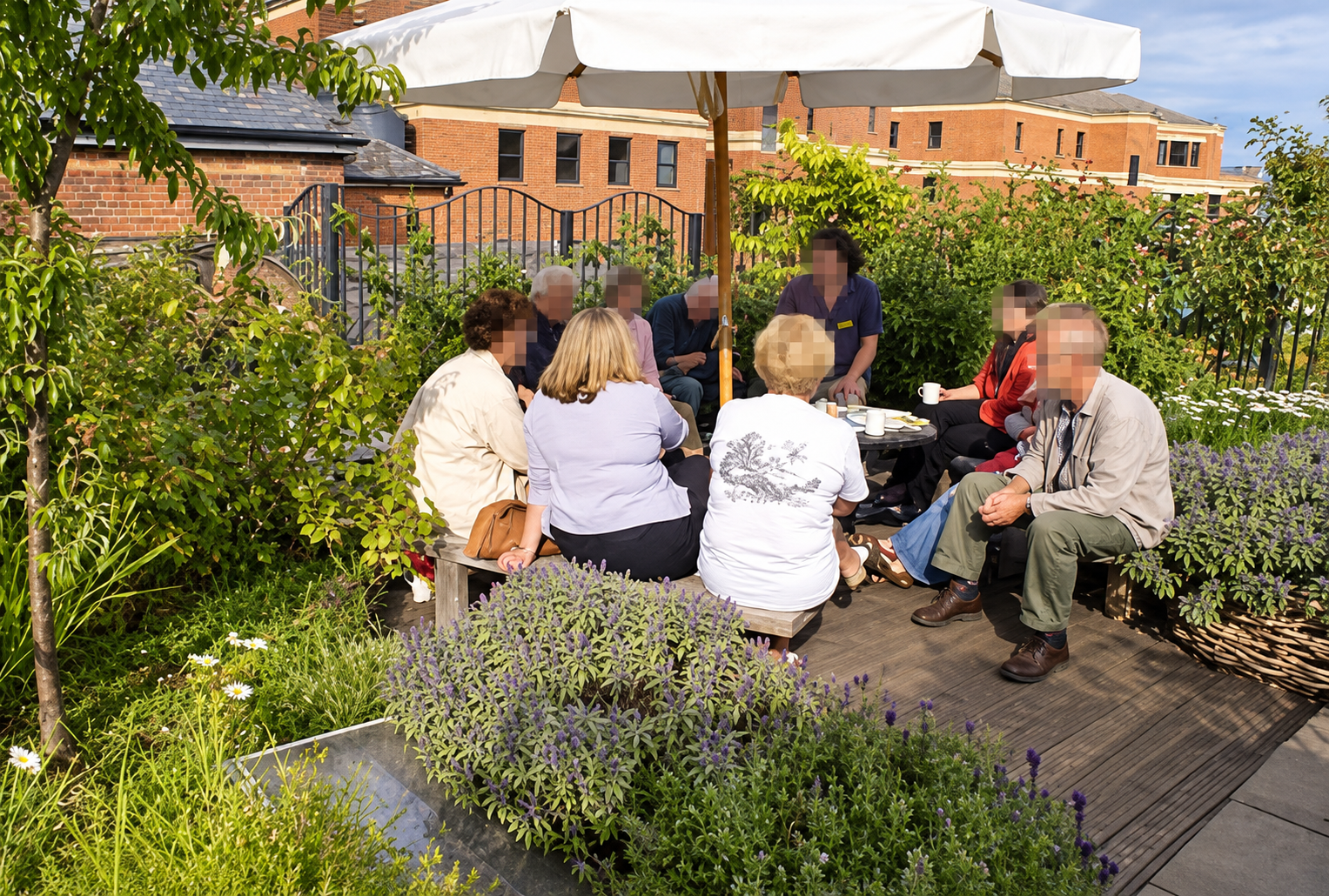
An underutilised space now turned into a rooftop allotment © Reading International Solidarity Centre
Research methodology
A qualitative approach
The research adopted a qualitative comparative approach to investigate and evaluate different methods of building-integrated agriculture. It involved identifying and examining a range of food-production systems, exploring their characteristics and comparing their potential for commercial application within the built environment.
The methodology comprised three main stages:
- Identification and classification of systems: A range of building-integrated agricultural methods was identified, including rooftop cultivation, productive green roofs, container-based systems, vertical farming and hydroponics. These approaches were categorised according to their growing methods and their relationship with the building structure.
- Comparative analysis: The different systems were examined and compared using relevant qualitative criteria to assess their characteristics, potential benefits, limitations and suitability for commercial food production. The comparison considered how each method used building space and how its application might vary according to the physical and functional characteristics of the built environment.
- Synthesis and conclusions: The findings from the comparative analysis were brought together to identify the relative strengths and weaknesses of the different approaches and to establish conclusions about their potential applications. The research aimed to determine which methods, or combinations of methods, offered the greatest potential for integrating commercial agriculture into buildings.
Through this comparative methodology, the research explored the relationship between agricultural production, building design and urban land use, contributing to a broader understanding of the opportunities and challenges associated with incorporating food production into the built environment.
Research findings
The value of urban agriculture as an integrated social, ecological and architectural system
The research found that both soil-based systems (green roofs and containerised farming) and water-based systems (hydroponics and vertical farming) offer opportunities for integrating food production into urban buildings. While water-based systems can achieve higher yields, they require greater investment, technology and energy input. Soil-based systems offer broader environmental and social benefits, including biodiversity, building insulation, improved urban aesthetics and opportunities for community participation and environmental education.
The research concluded that green roof agriculture offers particular potential for sustainable urban development by combining food production with ecological, architectural and social benefits. It also highlighted the need for further research into the long-term economic viability, energy demands and social implications of different urban farming approaches.