Lethe Villas
Kato Gatzea, Pelion Peninsula
Type |
Hospitality |
|---|---|
Location |
Kato Gatzea, Pelion Peninsula |
Architects |
Emmanouil Design & Construction |
Planting design |
Lily Bakratsa |
Agronomist |
Yannis Papantoniou |
|---|---|
Client |
Private |
Status |
Built |
Ambition
Planting deisgned for relaxed living
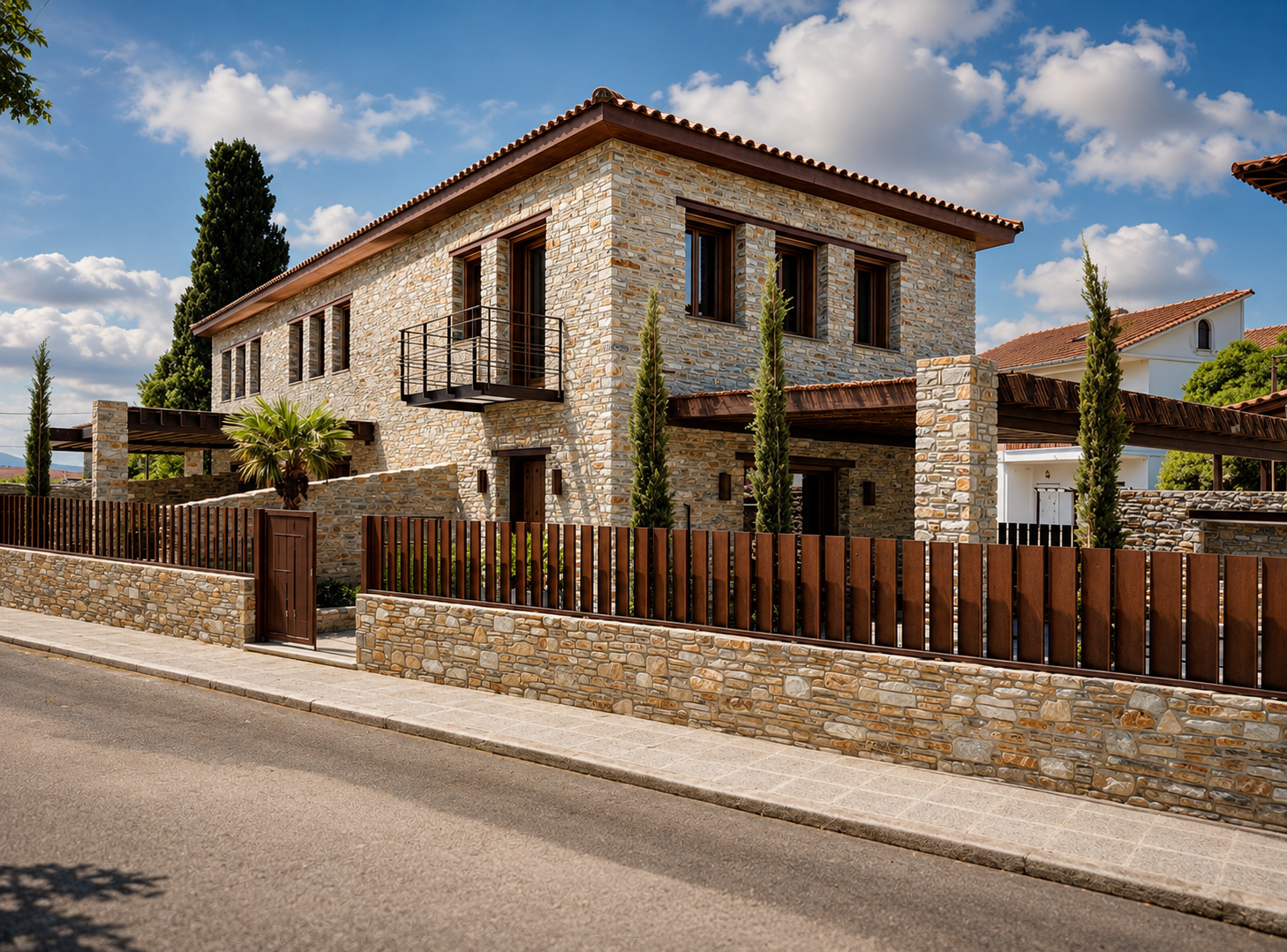
Nestled in the coastal village of Kato Gatzea, Pelion, this collection of villas was designed to celebrate the unique character of its surroundings. While the architecture already reflected the local vernacular through the use of natural stone, timber and earthy tones, the landscape lacked the planting needed to complete the experience and establish a meaningful connection with the wider landscape.
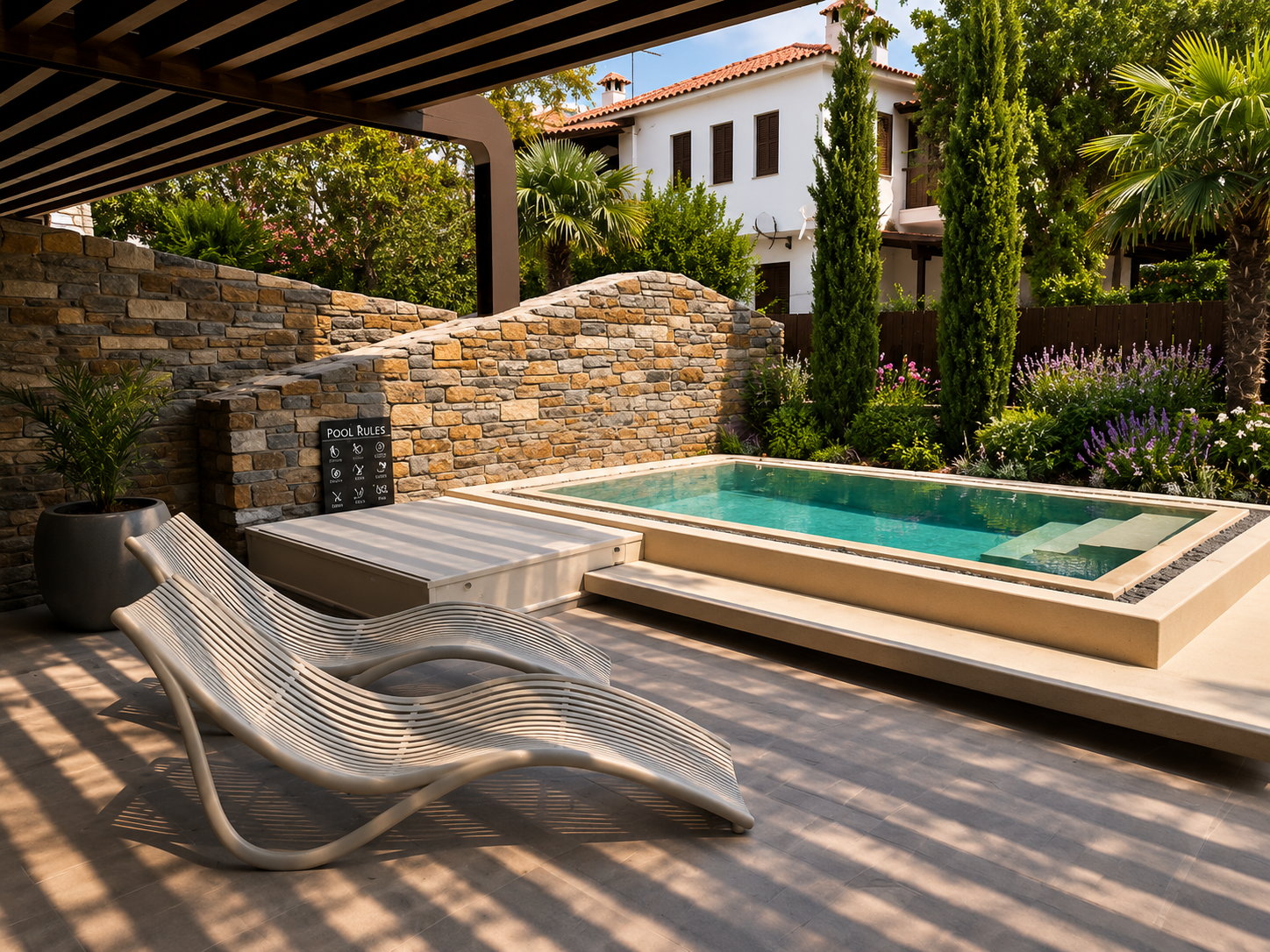
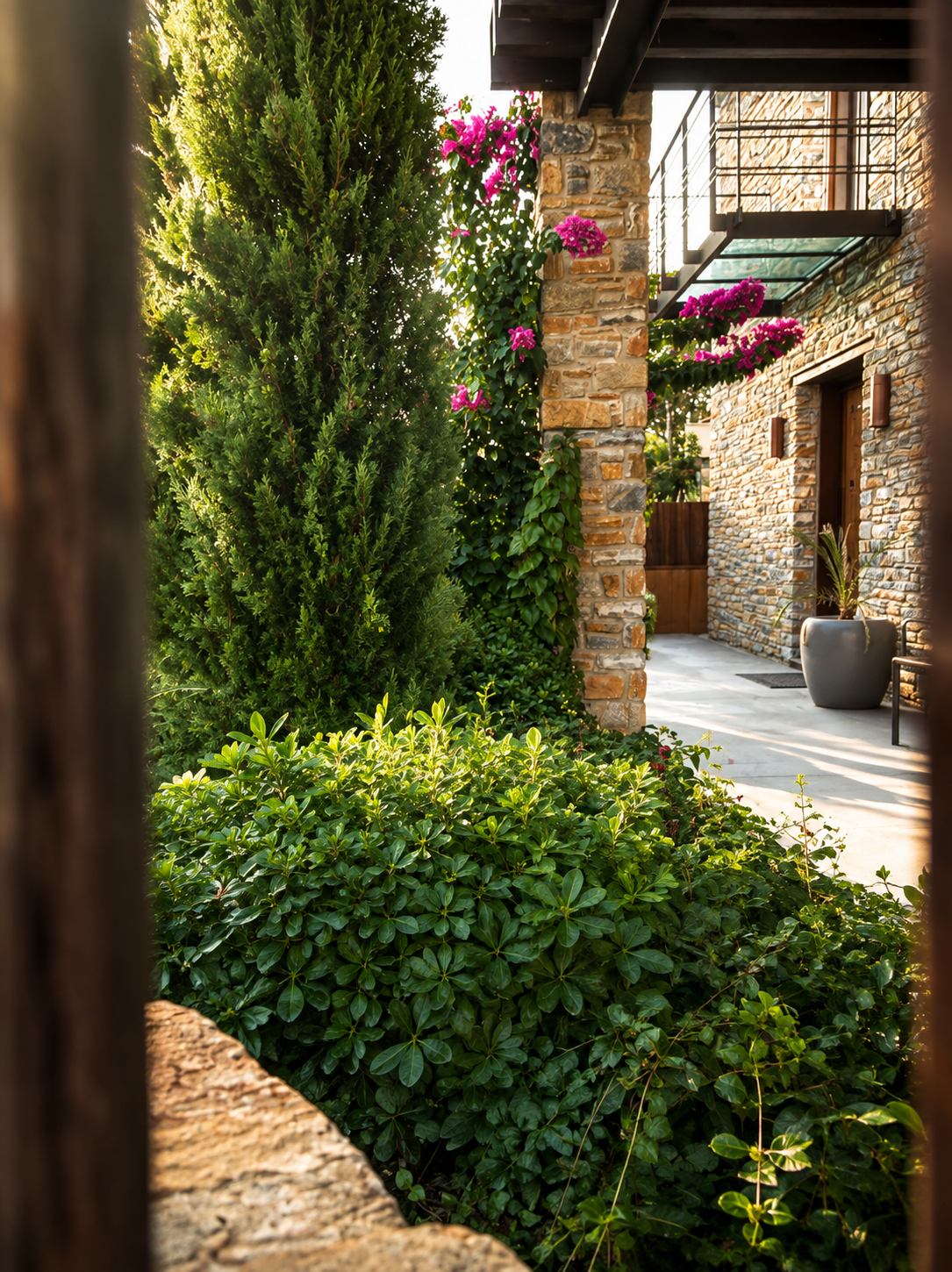
Our ambition was to create a garden that felt as though it had always belonged to the site. Drawing inspiration from the Mediterranean landscape of Pelion, we introduced a restrained yet richly layered planting palette that reinforces the identity of the village while softening the architecture. Structural cypress trees provide rhythm and vertical emphasis, complemented by olive trees, evergreen Pittosporum, fragrant lavender and generous drifts of Mediterranean shrubs. Bougainvillea was introduced to climb across walls and pergolas, adding vibrant seasonal colour, while Agapanthus brings texture and elegance to key arrival and poolside spaces.
The result is a landscape that enhances the architecture rather than competing with it—creating a warm, authentic and welcoming environment that immerses visitors in the spirit of Pelion from the moment they arrive.
Our approach
Rooted against the odds
Our approach was guided by the belief that a successful landscape should respond to both its environmental conditions and its architectural context. Working closely with an agronomist, we carefully selected a planting palette that could thrive in the challenging coastal climate of Pelion. The proximity to the sea meant that all species needed to tolerate salt-laden winds, while also being resilient enough to withstand the colder temperatures experienced during the winter months.
Beyond the climatic conditions, the site presented another significant challenge: the continuous spread of invasive bamboo shoots from neighbouring properties. Rather than relying solely on physical barriers, we adopted a long-term planting strategy, selecting robust, competitive species capable of establishing dense root systems and vigorous growth to help suppress the emergence of new bamboo shoots. This approach not only reduced future maintenance requirements but also encouraged a healthier and more stable planting community.
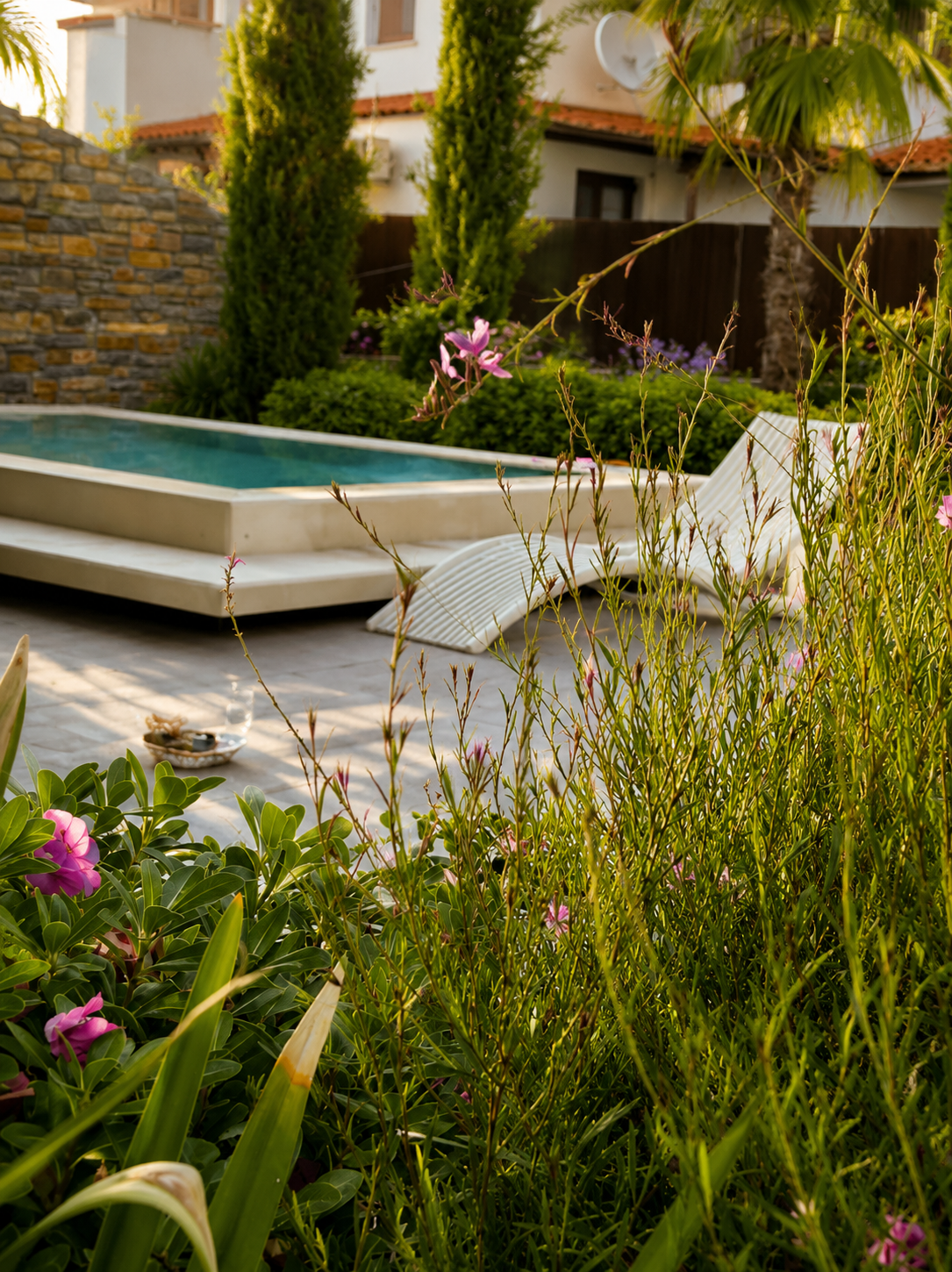
The planting design combines strong evergreen structure with seasonal interest. Cypress trees establish rhythm and vertical emphasis throughout the development, while olive trees reinforce the local identity and create an immediate sense of place. Layers of Pittosporum, lavender, Agapanthus and flowering Mediterranean species provide texture, fragrance and year-round interest, while vibrant bougainvillea softens the stone architecture with bursts of seasonal colour. Together, these carefully considered planting layers create resilient, low-maintenance gardens that are both environmentally appropriate and deeply connected to the landscape of Pelion.