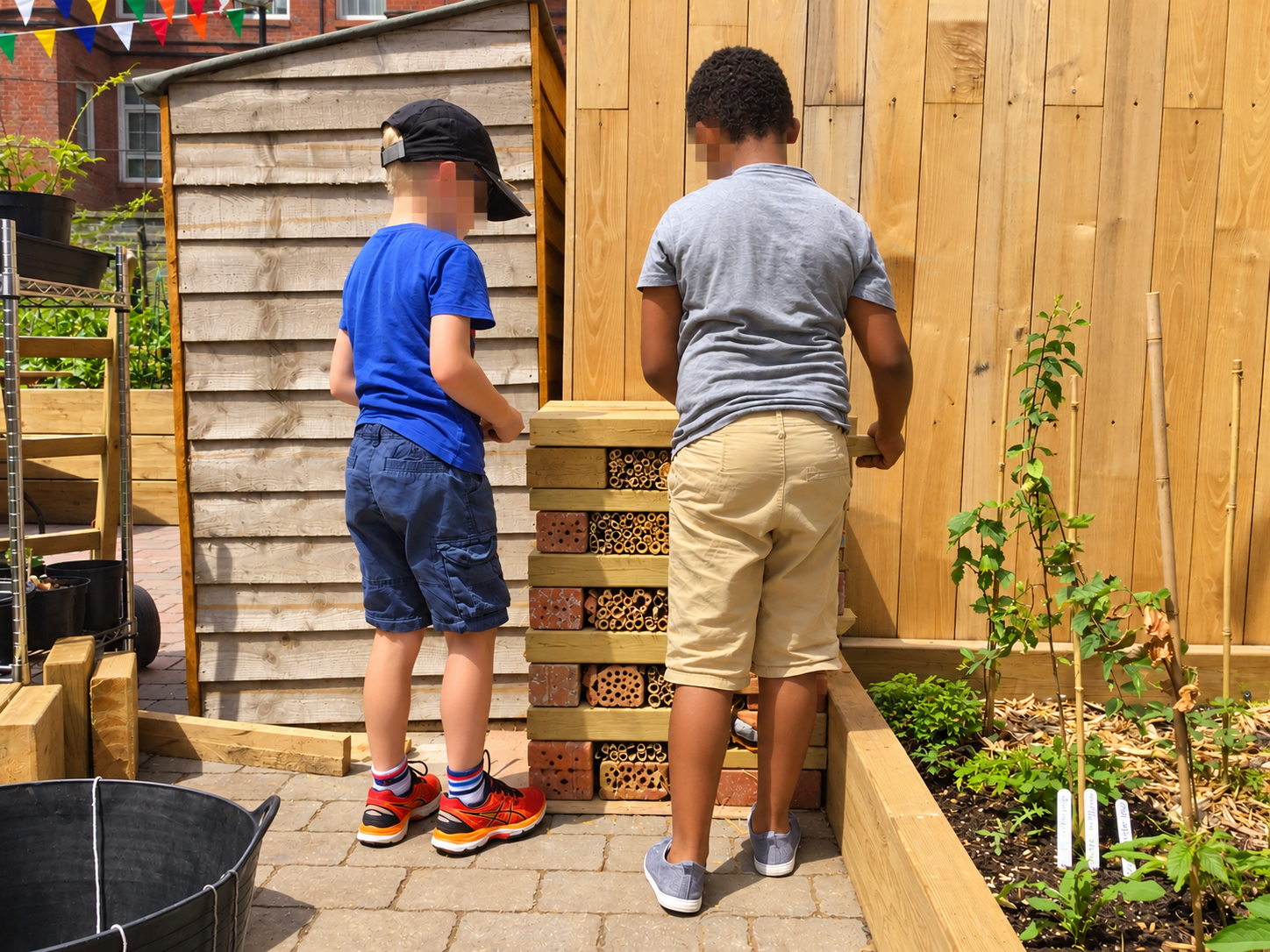
The big bug hotel project
Islington, London

Type |
Community building, landscape education, participative design |
|---|---|
Location |
Islington, London |
Team |
Community members of St.Luke’s Community Centre |
Client |
St.Luke’s Community Centre |
Size |
n/a |
|---|---|
Status |
Completed |
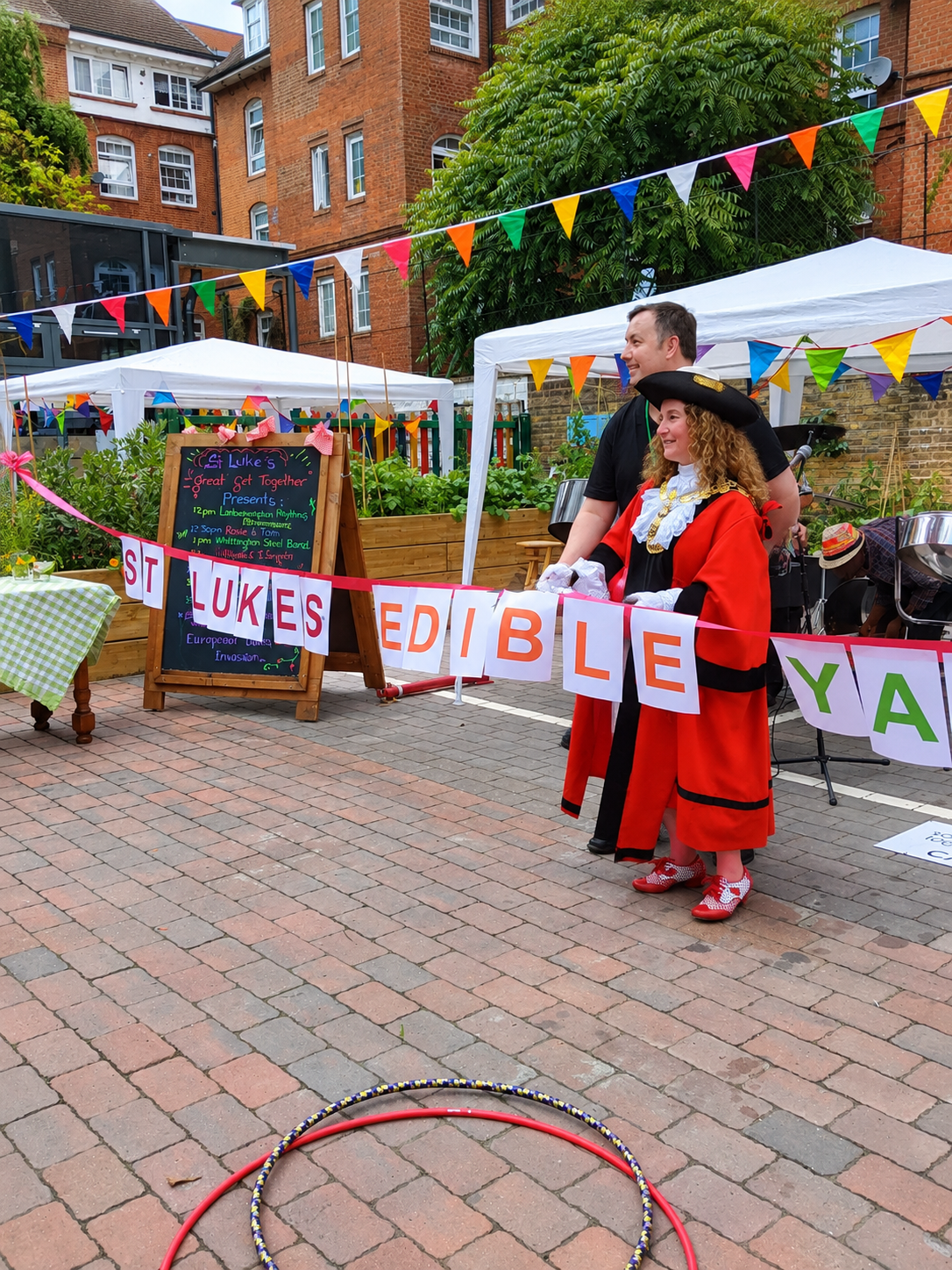
The opening of the Edible Yard © Lily Bakratsa
Overview
Building with wildlife in mind
The St. Luke’s Community Garden project in Islington, London, brought together local residents, community-centre participants and volunteers through a series of creative, practical and nature-based activities. The garden became a shared space for learning, experimentation and social interaction, combining gardening, art, biodiversity and collaborative making.
Activities included constructing a bug hotel using reclaimed timber, bricks and other reused materials, and participating in community garden events. The project also contributed to the celebration of the garden as a collective achievement, with activities and events that made the space more visible, welcoming and accessible to the wider community.
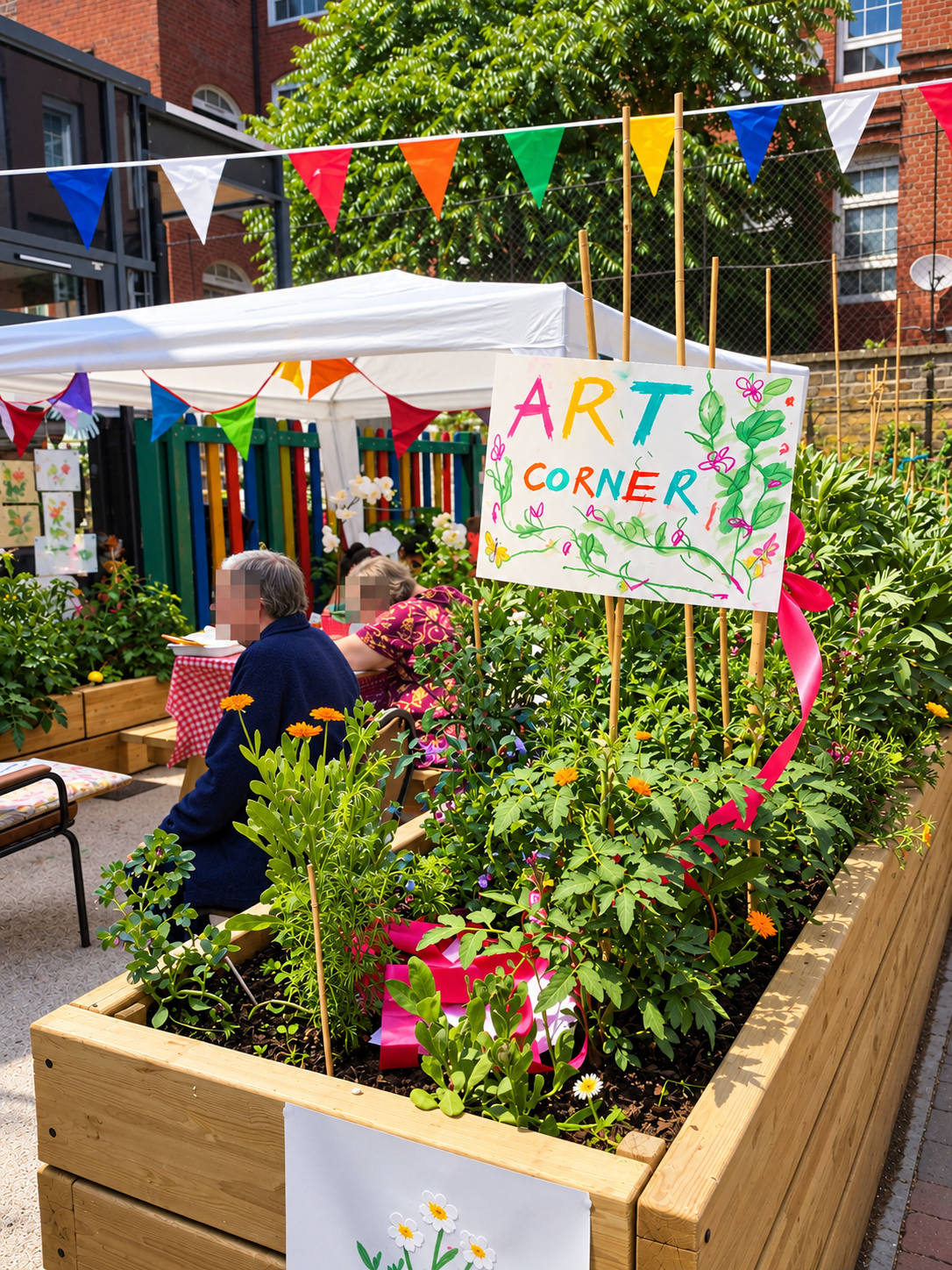
A family friendly garden © Lily Bakratsa
Relationship with landscape education
Landscape education as hands-on
The project approached landscape education as a hands-on, inclusive process that takes place beyond the classroom. Rather than learning about landscapes exclusively through drawings, theory or formal teaching, participants engaged directly with the materials, plants, habitats and social uses of a real outdoor space.
Learning through making
Building a bug hotel introduced participants to habitat creation, biodiversity and the ecological value of gardens. Working with reclaimed materials also encouraged an understanding of resourcefulness, reuse and sustainable design.
Understanding bug hotels as living systems
The project demonstrated that gardens are more than decorative spaces. They support wildlife, provide opportunities for learning and recreation, and influence how people interact with their surroundings. Participants experienced landscape as an interconnected ecological, cultural and social environment.
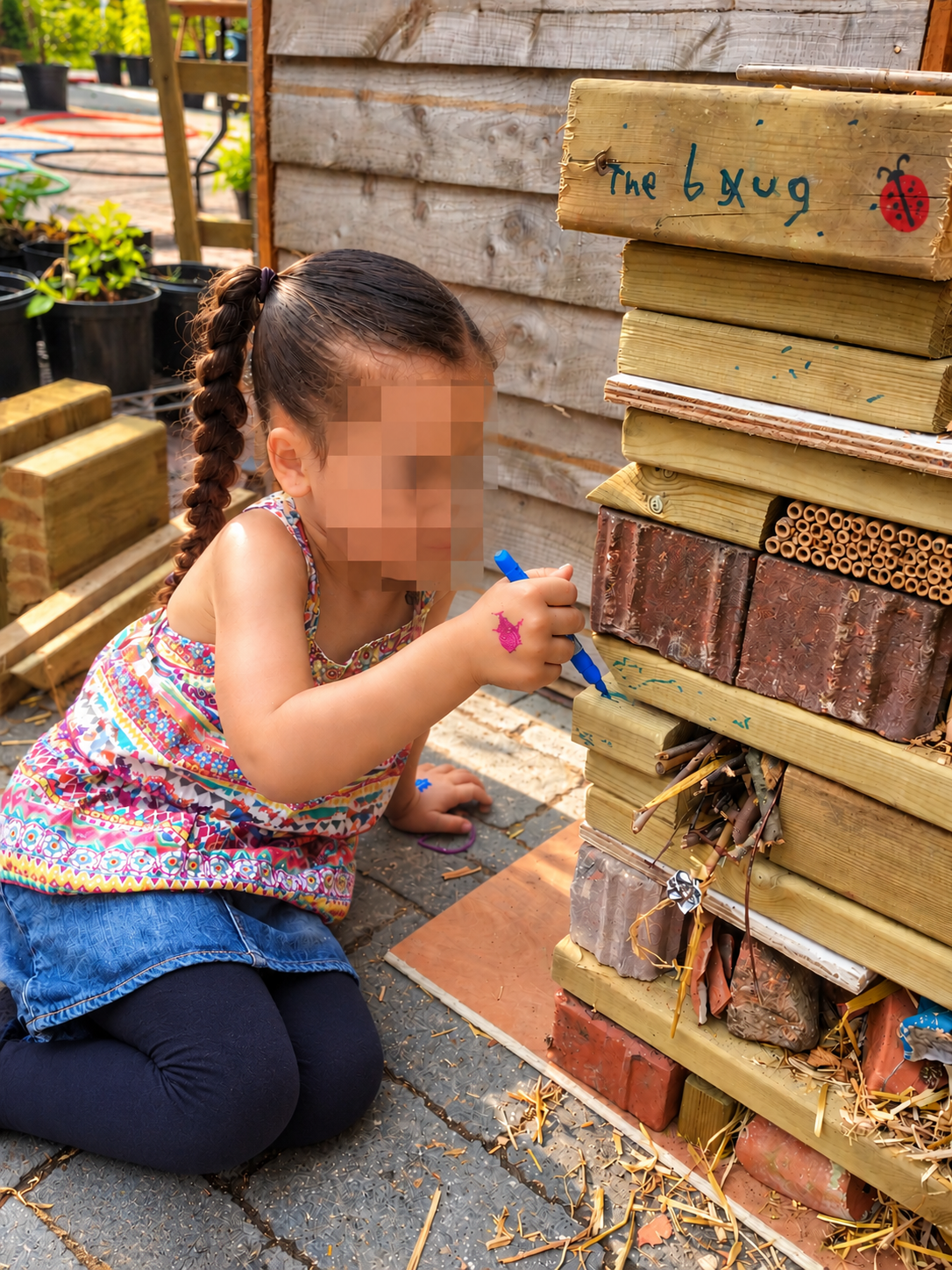
Environmental stewardship, social inclusion and a stronger sense of belonging © Lily Bakratsa
Bringing the community together
A setting for collective pride
A central ambition was to use the garden as a platform for connection, collaboration and shared ownership. The activities created opportunities for people with different ages, backgrounds and abilities to meet, learn from one another and contribute to a common purpose.
Collaborative workshops encouraged conversation and the exchange of skills, while shared creative tasks helped participants develop relationships through doing rather than simply talking. Constructing the bug hotel created a tangible outcome that people could work towards together, and the botanical art activities offered a welcoming way for individuals to express themselves and contribute their own perspectives.
Community celebrations and garden events extended this sense of participation beyond the workshops, bringing people together around a shared green space. The garden became not only a place to grow plants, but also a setting for creativity, social interaction, environmental awareness and collective pride.